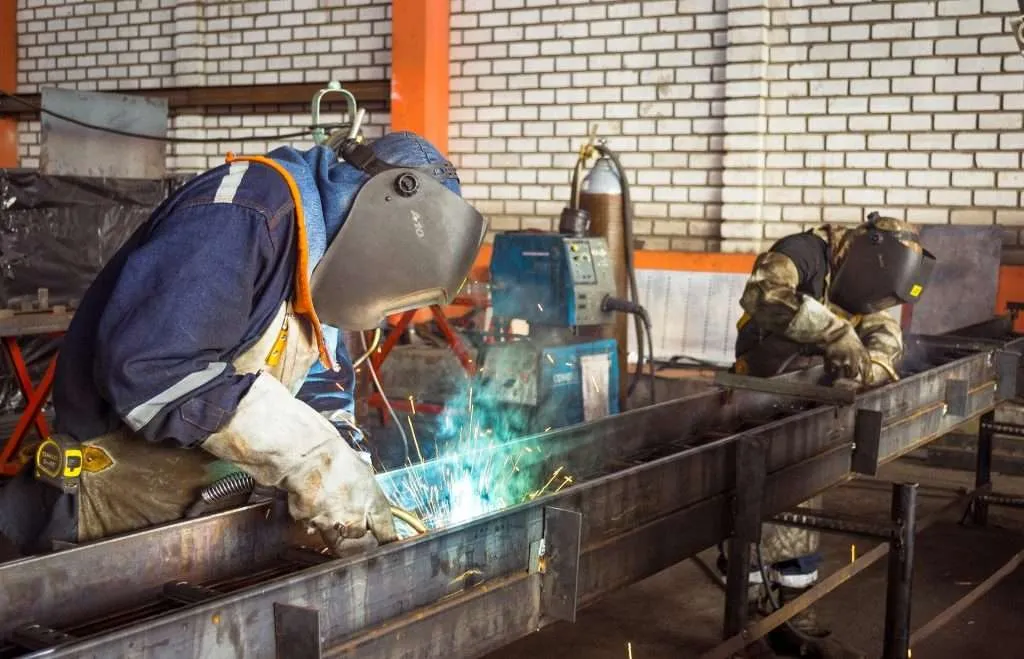
For thousands of skilled international tradespeople, an H-2B visa is the ultimate foot in the door. It gets you into the United States, places you on active construction sites, and lets you earn a solid living.
But there is a catch: the H-2B is strictly temporary. Once the season or project wraps up, you are required to head home.
If you have built a life, a reputation, and a solid network in the US, going back to square one every year can be exhausting. The good news? You don’t have to keep repeating the cycle. Transitioning from a temporary H-2B seasonal construction visa to a permanent EB-3 Employment-Based Green Card is a completely viable pathway.
Here is exactly how the process works, the hurdles you will need to clear, and how to successfully manage the transition.
Why the H-2B to EB-3 Pipeline Makes Sense
The US construction industry is facing a massive, structural labor shortage. Contractors are actively struggling to find experienced ironworkers, concrete finishers, heavy equipment operators, and welders.
While the H-2B visa fills these gaps temporarily, smart employers want to retain reliable talent permanently. This is where the EB-3 visa comes into play.
The EB-3 is a permanent immigrant visa divided into three categories:
-
Skilled Workers: Requires at least two years of job experience or training.
-
Professionals: Requires a US bachelor’s degree or foreign equivalent.
-
Unskilled Workers (Other Workers): Requires less than two years of training or experience.
Most construction trades fall neatly into the Skilled Workers or Unskilled Workers brackets. Unlike the H-2B, which ties you to a seasonal timeline, an approved EB-3 visa grants you and your immediate family permanent residency (a Green Card).
The Catch: H-2B is Not a “Dual-Intent” Visa
Before diving into the steps, you must understand a critical legal distinction. The H-2B visa is not a dual-intent visa. When you apply for an H-2B, you are declaring to the US government that you intend to leave when your authorized stay ends.
The EB-3 visa, conversely, is explicitly an immigrant visa.
Because of this, you cannot simply “convert” an H-2B into a Green Card on your own. Your employer must sponsor you, and the timing of your filings must be planned carefully to avoid violating your non-immigrant status.
Step-by-Step Blueprint for the Transition
Moving from seasonal work to permanent residency is a marathon, not a sprint. The entire process requires three major legal phases.
1. PERM Labor Certification
Your employer cannot just hand you a permanent job; they must prove to the US Department of Labor (DOL) that no qualified American workers are available to fill the position.
-
Prevailing Wage Determination: The employer requests the DOL to set the minimum wage for your position based on the local market.
-
Recruitment Period: The employer must run active job ads (in newspapers, job boards, etc.) to test the local labor market.
-
Filing Form ETA-9089: If no qualified US workers apply, the employer files the PERM certification.
2. Form I-140 (Immigrant Petition for Alien Worker)
Once the PERM is approved by the DOL, your employer files Form I-140 with US Citizenship and Immigration Services (USCIS). This step proves that the employer has the financial ability to pay your offered wage and that you meet the minimum qualifications for the job.
3. Adjustment of Status (Form I-485) or Consular Processing
This is the final step where you actually receive the Green Card. How you complete it depends entirely on your current visa status and priority date:
-
Adjustment of Status (AOS): If your priority date is current and you are legally inside the US on a valid H-2B visa, you can file Form I-485 to change your status without leaving.
-
Consular Processing: If your H-2B visa expires and you must return home before your priority date becomes current, you will complete your interview at the US Embassy or Consulate in your home country.
Strategic Timing is Everything
The biggest challenge in this transition is the timeline. The PERM process alone can take a year or more, while your H-2B status is capped by your seasonal contract. Furthermore, depending on your country of origin, there may be a multi-year backlog for available EB-3 visa numbers.
Because of this, you must start the conversation with your employer early. Do not wait until the final month of your H-2B visa to ask for sponsorship. If your employer initiates the PERM process during your first or second season, it gives you the best chance of minimizing gaps in your employment authorization or avoiding prolonged periods back home waiting for consular processing.
The Takeaway
Transitioning from an H-2B visa to an EB-3 Green Card is the ultimate upgrade for an international construction worker. It transforms temporary, cyclical employment into long-term stability and a pathway to citizenship.
The key to success lies in your job performance. Prove your value on the job site, build trust with your employer, and secure an experienced immigration attorney to ensure your paperwork aligns perfectly with US immigration timelines.